
Wind Mitigation & Hurricane-Resilient Roofing The cheapest way to lower a hurricane premium is documentation.
In Florida, what your carrier pays attention to isn't just the house — it's the paperwork that proves how the house is built. Here's how a wind mitigation inspection turns your roof into premium credits, feature by feature.

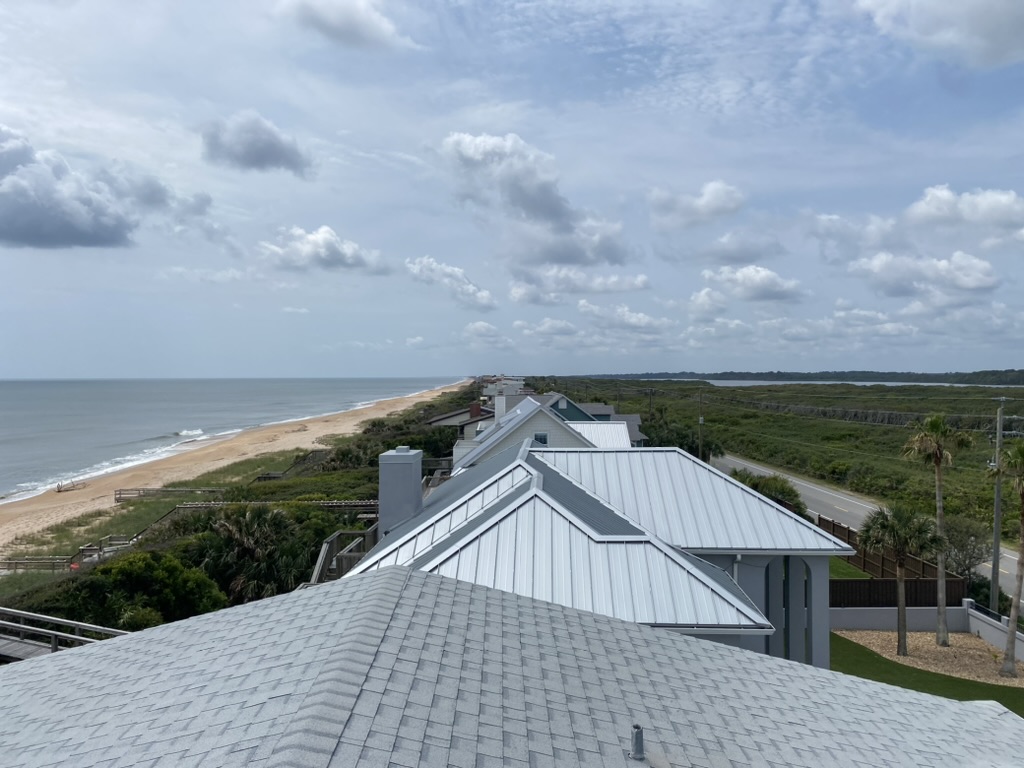
Florida homeowners rarely lose money on the house itself. They lose it on the form that describes the house. A wind mitigation inspection exists for one reason: to document the hurricane-resistant features your home already has, in the exact language your insurer needs to apply discounts under Florida law. Get the documentation right, and the savings are often larger than the inspection costs many times over.
This guide walks through what the inspection covers, the seven features that actually move your premium, what you can realistically save, and how to prepare so qualifying features get documented. If you'd rather skip to booking, you can schedule an inspection or compare transparent pricing first.
What a wind mitigation inspection actually is
A wind mitigation inspection is not a general home inspection, and it is not a home rating. It is a focused survey of a home's hurricane-resistant construction, documented on Florida's OIR-B1-1802 form and read by your carrier's underwriter to apply premium credits under Florida Statute §627.711.
The inspector examines the roof, attic, and openings, photographs each qualifying feature, and records exactly what the state form asks for. It's fast — usually under an hour for a typical home — and it stands on its own or bundles neatly with a 4-point inspection when a carrier wants both. Unsure what a term means as you read? The inspection glossary defines every one in plain English.
The seven features that move your premium
The state cares about seven things. Each one is a lever, and each is documented separately on the form:
The OIR-B1-1802 checklist
- Roof covering — the type and whether it meets the current Florida Building Code.
- Roof deck attachment — nail type, size, and spacing holding the deck down.
- Roof-to-wall connection — toe nails, clips, or single/double wraps.
- Roof geometry — hip roofs resist wind better than gable roofs.
- Secondary water resistance — a sealed roof deck barrier beneath the covering.
- Opening protection — impact-rated windows, doors, and shutters.
- Roof age & permit — when the roof was built or last replaced.
Of these, the roof-to-wall connection and opening protection tend to carry the largest credits — which is exactly why they're the ones most often under-documented. A clip photographed at the wrong angle, or a shutter rating that isn't captured, can quietly cost you the discount you already earned.

The house doesn't change on paper. But the paper is what your carrier reads.
Brian Walker, Certified Master InspectorThe OIR-B1-1802 form, and why documentation wins
The 2026 OIR-B1-1802 is the single document every Florida carrier reads. It's not enough for a feature to exist — it has to be photographed, labeled, and entered correctly. A missing attic photo or an ambiguous nail-spacing note is the most common reason a wind-mit credit is delayed or denied.
That's why Lunar delivers a full photo-documentation pack with every wind mitigation report, backed by our insurance-ready reporting standard. If a carrier ever questions a finding, the evidence is already in the file. Digital delivery within 24 hours means your agent isn't left waiting on paperwork.
What you can actually save
Savings vary by carrier, policy, and home — nobody can promise a number — but the wind portion of a Florida premium is often a large share of the total, and mitigation credits apply directly to it. For many Northeast Florida homes, especially newer or recently re-roofed ones, the documented credits can offset the cost of the inspection many times over in the first year alone.
Coastal homes in high wind-exposure areas like Fernandina Beach and Amelia Island tend to see the biggest swings, because they carry the highest baseline wind premiums. That's also where precise documentation matters most.
How to prepare for your inspection
A little prep makes the report more complete. Clear access to the attic hatch and electrical panel, have any roof permits or replacement receipts handy, and make sure shutters or impact-rated openings are easy to identify. Our inspection-day walkthrough covers the full list, and how it works walks through what happens at each step.
Still deciding what you need? The Find My Inspection tool takes under a minute and points you to the right service with a starting price. If you have a specific question first, the wind mitigation FAQ answers the most common ones.
Next steps
If your policy is up for renewal, or you've re-roofed in the last few years, a wind mitigation inspection is one of the highest-return hours you can spend on your home. Book a wind mitigation inspection, bundle it with a 4-point or roof certification if your carrier asks, and we'll deliver the documented, insurer-ready report, typically within 24 hours.
This guide is general educational information for Northeast Florida homeowners and buyers. It is not legal, engineering, or insurance advice, and it is not a substitute for a professional inspection of a specific property.
Brian is the Certified Master Inspector behind Lunar, with 20+ years of building, remodeling, and inspection experience across Northeast Florida. He writes these field notes to help homeowners, buyers, and investors make confident decisions. Read more about Lunar or schedule an inspection.