
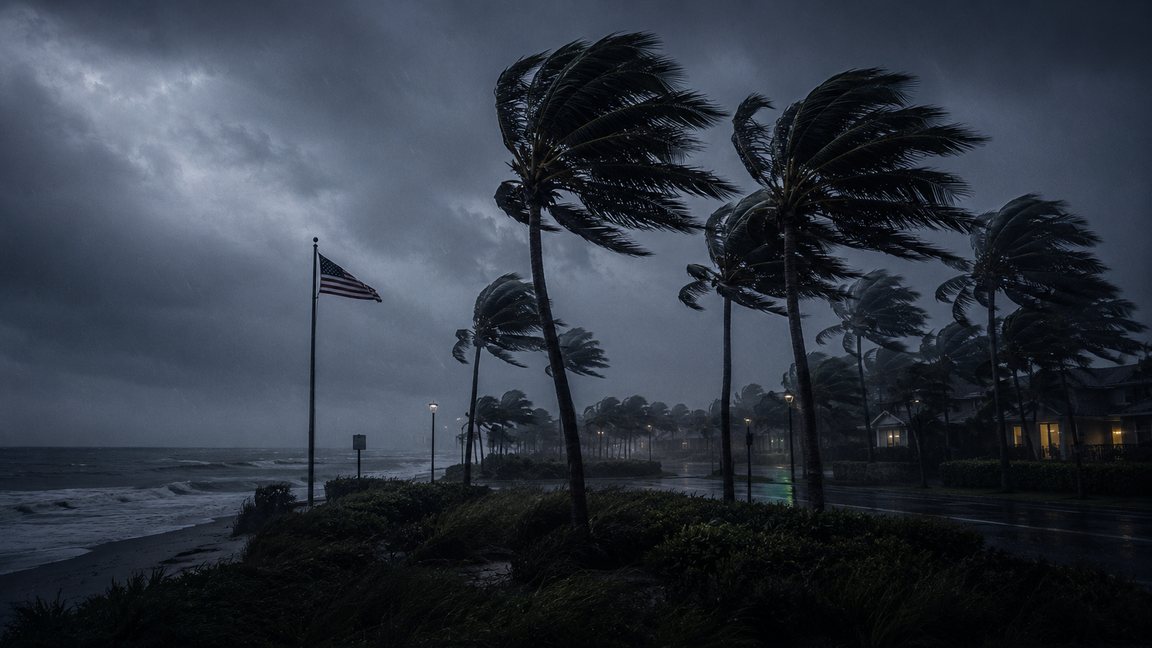
Storm Readiness InspectionKnow the condition before the forecast does.
A storm does not create weaknesses — it finds the ones already there. This inspection documents the condition of the systems a storm tests first, so you enter the season with a dated, photographed baseline — and can prove what changed afterward. Most reports delivered within 24 hours.
Built for the weeks either side of a storm.
Two moments, one inspection discipline — documented condition, before and after.
Season is coming
You want the roof, openings, and drainage looked at while there is still time to act — not a scramble once a cone appears on the map.
A storm just passed
You need observable conditions photographed and dated for your records before repairs, cleanup, or a claim conversation begins.
The property sits empty
Second homes, rentals, and relocations — someone should walk it who knows what a Florida storm does to an unattended building.
You maintain it yourself
A prioritized list of what actually needs attention this year, separated from what can wait — so maintenance money goes where exposure is highest.
Booking to baseline, in four steps.
Schedule online
Standalone, or added to a home inspection, wind mitigation, or thermal visit.
We document
60–90 minutes: roof, openings, drainage, and exterior attachments, photographed.
Priorities, ranked
Findings separated into act-now, this-season, and monitor — with the reasoning.
24-hour report
A dated, photo-documented baseline you can compare against after any storm.
Same-week availability across all five counties.
What a storm tests first.
A visual, non-invasive inspection of the systems that decide how a building handles wind and water. Conditions are reported as observed on the day of the inspection — no inspection can predict how a structure will perform in a specific storm.
Roof covering & flashings
Covering condition, lifted or missing components, flashing and penetration seals — where water gets in first.
Openings & protection
Windows, doors, and garage doors, plus whatever protection is present — shutters, panels, or impact glazing — and whether hardware is complete and operable.
Drainage & grading
Gutters, downspouts, discharge points, and the grading that decides whether storm water leaves or pools against the foundation.
Exterior attachments
Soffit and fascia, screen enclosures, railings, and mounted equipment — the components that become debris.
Attic & ventilation
Visible decking, existing stains, and vent condition — where a small prior leak becomes a large one under sustained rain.
Site & vegetation
Overhanging limbs, proximity of trees to the structure, and loose site items — observed and reported, not remediated.
A dated baseline you can prove.
A photo-documented condition report, most delivered within 24 hours, with findings ranked by exposure — so you know what to fix before the season and what merely needs watching.
The value shows up twice: once as a maintenance plan, and again after a storm, when a dated set of before photographs is the difference between describing damage and documenting it. Coverage decisions remain with your carrier and its adjuster — this report is condition documentation, not a claim or a repair scope.
Every storm readiness inspection
- 24-hour digital report, organized by system and priority
- Dated photographs of every documented condition
- Findings ranked act-now, this-season, or monitor
- Notes on opening protection present and its condition
- A call with the inspector who walked the property
- Bundling with wind mitigation or thermal imaging in one visit


Brian Walker, CMI™
Every Lunar inspection is performed and signed by Brian Walker — an InterNACHI Certified Master Inspector and My Safe Florida Home participating inspector whose background includes contracted housing inspections supporting U.S. Army housing programs, with 20+ years of building, remodeling, and field experience behind the credential.
One inspector, one standard: contractor-grade evaluation, insurer-grade documentation, and a direct line to the person who actually walked your property.
Lunar Home & Commercial Inspections
Storm readiness questions, answered.
A documented condition assessment of the systems a storm tests first — roof covering and flashings, openings and their protection, drainage and grading, and exterior attachments. It is a visual, non-invasive inspection that records what is present and its condition before the season, so you have a dated baseline.
After a storm, the inspection documents observable conditions and photographs them for your records or your claim. It is not an insurance adjustment or a scope of repair: coverage and claim decisions are made by your carrier and its adjuster.
No. A wind mitigation inspection completes Florida's OIR-B1-1802 form for insurance credit purposes. Storm readiness is a condition inspection with no state form attached. Many owners do both — the wind mitigation form for the carrier, the readiness inspection for maintenance planning.
Before hurricane season for a pre-season baseline, or after a named storm for damage documentation. Both are available year-round, standalone or added to another inspection in the same visit.
Yes. It can be added to a home inspection, wind mitigation, or thermal imaging visit. Add-on availability depends on property conditions, accessibility, and scheduling, and is confirmed at booking.
Roof surfaces are inspected where they can be walked safely, and otherwise evaluated from the eaves, from the ground, and from the attic. Lunar does not use aerial imaging. Safe, accessible areas only — the report states the method used.
The standard behind every visit.
Certified Master Inspector
The profession's highest credential. Reports signed by a CMI carry weight with agents, lenders, and insurance carriers.
Federal-contract discipline
Brian performed contracted housing inspections supporting U.S. Army housing programs. Your property gets the same checklist rigor — nothing skipped, everything documented.
24-hour reports
Photo-documented digital reports, most delivered within 24 hours, so inspection contingencies and carrier deadlines stay on track.
Technology on every visit
Thermal imaging and instrument diagnostics deployed whenever conditions call for them — documented in the same report.
Northeast Florida native
Coastal wind exposure, mid-century Jacksonville wiring, St. Johns new builds — we inspect what this region actually has.
Support after the report
Complimentary repair re-inspection verification and plain-English answers — the report is the start of the relationship, not the end.